The Phase Everyone Can See — And the Layer That Usually Isn’t
February 23, 2026
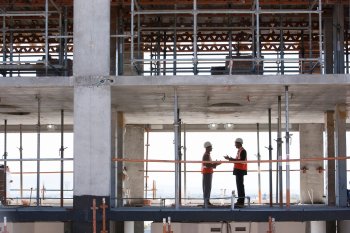
In most capital projects, attention naturally concentrates on the phase that is easiest to observe. Construction is active. It produces movement, invoices, schedules, and visible progress. It generates data in real time, which makes it the focal point for discussion when projects begin to diverge from expectations. Because of that visibility, construction often becomes the reference point for understanding the entire project. But visibility is not the same as origin.
Where Attention Goes When Variance Appears
Consider a familiar situation. A renovation program is well underway. Work is progressing. Costs begin trending above plan. Change orders accumulate, often tied to conditions described as “field discoveries” or “scope clarifications.” Leadership begins asking predictable questions: Why is the project over budget? Is execution being controlled? Who owns the variance? Are similar projects exposed to the same risk?
The investigation typically centers on the jobsite, because that is where evidence exists now. Yet construction is operating within parameters that were defined much earlier.
The Earlier Phase Leaves Fewer Artifacts
Before execution began, the project moved through approval: Scope language was framed. Assumptions were discussed, often verbally. Bid comparisons were summarized. Budget alignment was accepted as “consistent with prior work.” These steps formed the conditions under which construction now operates. But unlike construction, this earlier phase rarely leaves behind a fully reconstructable record of how uncertainty was evaluated, bounded, or accepted. Execution produces documentation as a byproduct of activity. Decision formation often does not.
Execution Can Display Variance. It Cannot Explain Its Formation.
When variance appears, the only active phase available for scrutiny is construction. It contains the numbers. It contains the contracts. It contains the timeline pressure. But construction is not generating the original assumptions—it is carrying them forward. The observable object becomes the jobsite. The explanatory object often sits upstream, where visibility was lower and documentation lighter. Those are different layers.
Why This Distinction Matters to Capital
Capital projects are approved in one environment and executed in another. The approval environment is interpretive: It relies on definitions, comparisons, and framing. The execution environment is mechanical: It applies drawings, contracts, and authorizations already in place. When the two are conflated, organizations attempt to solve interpretive problems with execution controls. The result is not necessarily failure of construction. It is difficulty reconstructing how the decision itself was structured.
A Question That Surfaces Late — If At All
If asked months after approval: What evidence did we rely on to understand the decision we were making—and could we reconstruct that rationale today? Many organizations find that the materials available explain what was built, but not fully how the decision was bounded at the time capital was committed. This is not a construction issue. It is a visibility issue between phases.
Seeing the Difference Between Activity and Causality
Construction will always be the most visible phase of a project. It should be. It is where plans take physical form. But the conditions that shape financial outcomes are often established earlier, when visibility is lowest and momentum has not yet begun. Execution reveals those conditions. It rarely creates them. Recognizing that distinction allows organizations to examine capital performance at the layer where it was actually formed, rather than only where it became observable.
If this dynamic feels familiar in your projects or portfolio reviews, you are not alone. Many institutions are beginning to look more closely at how decisions are structured before execution begins—not to change construction, but to better understand the environment capital enters when it is approved.